
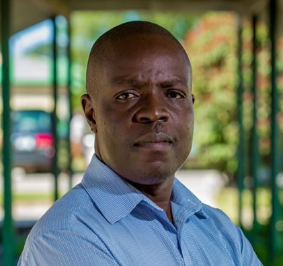
Dr. Joseph Phiri
The Dean
To our students, prospective students, industry partners, local, national and international collaborators, sponsors of our students, and other stakeholders, I welcome you to the Copperbelt University School of Graduate Studies. This school is responsible for training postgraduate students at master’s and doctoral levels of study, representing the pinnacle of academic study. The School of Graduate Studies is committed to a dedicated academic service to our students to ensure the provision of quality services culminating into quality and fully baked. Our students are so well trained in contemporary and leading-edge skills that they participate at the frontline of creating solutions to local, national and international problems upon graduation. The school draws its training programmes from other schools and directorates, namely, School of Built Environment, School of Business, Dag Hammarskjöld Institute for Peace and Security, School of Engineering, School of Humanities and Social Sciences, School of Information and Communication Technology, School of Mathematics and Natural Sciences, School of Medicine, School of Mines and Mineral Sciences, and School of Natural Sciences.
As such, we offer diverse training programmes ranging from accounting and finance, business administration, economics, mineral sciences, project management, environmental engineering, science education, climate sciences, urban planning, medicine and public health. We have assembled a team of appropriately qualified and experienced lecturers to handle the diverse learning needs of both master’s and doctoral students. For our prospective doctoral students, we invite you to browse through the profiles of our research supervisors in order to gauge how your research needs align with our expertise. Our researchers are available to engage you in an initial informal conversation as you share your interim research thoughts through a concept note. We have a portfolio of international students coming from the sub-region including Botswana, Namibia, Zimbabwe, Kenya, Tanzania, Rwanda and Uganda. This assemblage of students is a testament to our commitment to provide knowledge of international standard.
Once again, I welcome everyone to the School of Graduate Studies.
Dr Joseph Phiri
Dr Joseph Phiri is the 3rd Dean of the Copperbelt University School of Graduate Studies, a position he assumed on 1st July 2025. Before becoming Dean, Dr Phiri
served as School of Business Research Coordinator, Focal Point Person for the Copperbelt University Africa Centre of Excellence in Sustainable Mining (CBU-ACESM) thematic group on Livelihoods, Entrepreneurship and Corporate Social Responsibility. He also served as Assistant Dean for the School of Business and Head of Department for Operations and Supply Chain Management. Dr Phiri also served as the School of Business Representative to the Kitwe & District Chamber of Commerce and Industry for over 5 years. His academic background spans more than 22 years of teaching both at undergraduate and postgraduate levels, both in Zambia and the United Kingdom. The teaching experience has been in the areas of Financial Management, Cost and Management Accounting, Advanced Management Accounting, Project Finance, and International Business.
Joseph has supervised several PhD, Master’s and undergraduate students on topics covering accounting, finance, corporate governance, auditing and financial
accountability. He has published his work on accounting, auditing, accountability and performance management in top-tier international journals such as Accounting, Auditing & Accountability Journal, Journal of Accounting in Emerging Economies, Journal of Accounting and Organisational Change, Financial Accountability & Management, Meditari Accountancy Research, and Business and Professional Ethics Journal. Through his research and publication activities, Dr Phiri has won several prestigious awards from renowned bodies including the British Academy of Management, Emerald Publishing, and the Pan African Federation of Accountants. Dr Phiri has written award winning research proposals which have won grants from both local and international funders such as the Copperbelt University Research Grants
Committee, the National Science and Technology Council of Zambia, the European Union Delegation to Zambia and COMESA, and the Czech Aid. Most of these
research grants involved collaborating not only with colleagues from other faculties within the Copperbelt University but also partners from industry and universities abroad. Dr Phiri’s research interest lies at the interface between politics, power, informality, and tradition, with accounting, governance, accountability and sustainability practices within public sector organisations.
Google Scholar : https://scholar.google.com/citations?user=zhIGLeMAAAAJ&hl=en
Research Gate : https://www.researchgate.net/profile/Joseph-Phiri-2?ev=hdr_xprf
Web of Science : https://www.webofscience.com/wos/op/publications/summary

Dr. Lilias Makashini‑Masiba
Dr. Makashini-Masiba is a specialist in sustainable urban and real estate development, particularly focusing on how community structures and built environments evolve in post-industrial contexts. Her expertise spans:
- Sustainable community-driven urban regeneration — revitalizing recreational and communal infrastructure in Zambia’s former mining towns.
- Built environment governance —examining how local governance frameworks mobilize community action for public facility management.
- Community-based facilities management — analyzing social enterprises and grassroots models for delivering public services in developing contexts.
- Energy usage and efficiency behavior— assessing household practices and perceptions around energy efficiency and adoption of renewable technologies in urban Zambia
Areas of Consultancy & Strategic Interest
Dr. Makashini-Masiba offers strategic expertise in:
• Urban Regeneration Programs: Planning and coordinating community-driven transformation of post-mining townships.
• Governance & Community Engagement: Designing frameworks that mobilize local action for public infrastructure redevelopment.
• Facilities as Urban Commons: Advising on governance models to manage shared urban spaces for social cohesion and sustainability.
• Brownfield and Heritage-Led Redevelopment: Crafting proposals to turn legacy industrial sites into affordable housing or community hubs.
• Energy Behavior and Urban Planning: Advising on energy-efficient housing strategies informed by urban household behavior studies.
- BSc in Land Economy (Copperbelt University)
- MSc in Real Estate (University of Pretoria)
- PhD in Real Estate (Copperbelt University
 Dr. Sampa Chisumbe
Dr. Chisumbe specializes in urban housing development, with a strong emphasis on stakeholder dynamics, infrastructure planning, and safety preparedness in the built environment—especially within the Sub‑Saharan African context. His work centers on understanding and improving:
- Stakeholder participation in housing provision under neoliberal frameworks
- Capacity building among communities and institutions to support inclusive housing development
- Urban governance, finance, and policy obstacles to sustainable housing
- Safety preparedness in public infrastructure, such as fire safety knowledge in commercial spaces
- Framework Development: Dr. Chisumbe has authored influential theoretical models. One such model outlines stakeholder participation in urban housing from a neoliberal perspective, delineating roles of state, private sector, communities, and NGOs
- Capacity Modeling: He co-developed a validated model identifying four key dimensions of stakeholder capacity—including institutional staffing, technical support, and community empowerment—to drive effective urban housing development
- Contextual, Evidence-Based Research: His peer-reviewed article exploring key factors shaping urban housing development in Lusaka—from governance and finance to infrastructure delivery—is highly insightful for policymakers and practitioners alike
- Safety & Preparedness Expertise: Expanding beyond housing, Dr. Chisumbe investigated fire safety preparedness among shopping mall employees in Lusaka, revealing significant gaps and recommending practical safety training and visible emergency planning
- Rural Development Contributions: He also explored how rural entrepreneurship catalyzes community development in Zambia, showing entrepreneurship enhances livelihoods, employment, and reduces migration through key enabling factors
- Infrastructure & PPP Insights: In contributing to infrastructure development literature, he examined public–private partnerships in Zambian infrastructure projects, further highlighting his depth in governance and development planning
- Rural Infrastructure Standards: Another work delves into the design and standards for rural road construction in Lusaka Province, reinforcing his
commitment to inclusive and sustainable infrastructure planning

Dr. Xoliswa Kayumba Kauert
Dr. Kayumba Kauert’s doctoral research, titled “The Search for an Urban Aesthetic of Lusaka”, explores the architectural evolution and urban morphology of Lusaka, Zambia’s capital. Drawing from the city’s Garden City-inspired layout—with crescents, roundabouts, and diagonals—her thesis interrogates how socio-political shifts and periods of governance have shaped its distinctive “patchwork” urban form. Importantly, she examines whether imported aesthetic frameworks truly align with Zambia’s cultural identity and environmental context.
- Contextual Urban Analysis: Her work offers a rich, place-based investigation into Lusaka’s architecture and urban design history.
- Interdisciplinary Approach: She combines archival research, field study, purposive sampling, and socio-spatial theory to frame her analysis.
- Critical Inquiry into Aesthetic Appropriation: Her research challenges whether inherited European planning paradigms authentically resonate with Lusaka’s cultural and environmental realities.
- Contribution to African Urban Discourse: Her thesis adds important depth to conversations on post-colonial urbanism and the localized expression of city form.
- Rooted
in Practice: Dr. Kayumba Kauert’s research
is deeply grounded in the physical, historical, and sociocultural fabric
of Lusaka.
- Theoretical
Relevance: Her interrogation of aesthetic
appropriation provides a thoughtful critique of urban planning legacies in
everyday African contexts.
- Interdisciplinary
Influence: Her methods and insights are
relevant not only to urban studies and architecture but also to heritage
studies, post-colonial theory, and spatial justice
Dr. Nelly Chunda Mwango
Dr. Mwango’s master’s thesis, completed in 2004 at the University of KwaZulu‑Natal, centered on community-based natural resource management (CBNRM) in Zambia. Her case study of the Luansobe Settlement in Mufulira (Copperbelt Province) assessed the implementation of Zambia’s Community Environmental Management Programme (CEMP). This work critically examined how participatory approaches and governance structures affect sustainable resource use and local livelihoods
- Applied, Localized Insight: Her research zeroes in on tangible challenges faced by peri-urban communities in Zambia, particularly concerning deforestation and deforestation’s socio-environmental consequences.
- Participatory Governance Expertise: She evaluates the effectiveness of institutional frameworks that involve both formal authorities and local stakeholders in environmental management.
- Multi-level Analysis: By assessing structures at national, district, and community levels, her work provides a comprehensive look at how environmental policies translate (or fail to translate) into on-the-ground action.
- Cross-Institutional Collaboration: Her training, supervision, and academic partnerships between UKZN and Copperbelt University exemplify her advocacy for international academic cooperation rooted in regional development challenges.
- Locally Grounded, Globally Relevant: Her thesis offers deep insights into participatory natural resource governance in Zambia—findings that are relevant across sub-Saharan Africa and beyond.
- Policy-Relevant Research: Dr. Mwango’s work serves as a strong foundation for designing and implementing community-centered environmental programs that are both sustainable and contextually appropriate.
- Bridging Academic Worlds: By working across South African and Zambian academic institutions, she exemplifies the power of collaborative scholarship addressing pressing regional environmental issues.
Dr. Kezala Jere
Dr. Jere’s scholarly work intersects urban morphology, sustainable architecture, and data-driven spatial analysis, particularly within Southern African contexts. He uniquely combines architectural heritage, urban development patterns, and advanced image recognition technologies. His research seeks to uncover how modern investments and planning practices reshape the distinctive textures of African urbanity.
- Interdisciplinary Vision: Dr. Jere employs an enriching mix of architectural theory, spatial analysis, and AI-enhanced satellite imagery, demonstrating a forward-looking approach to urban studies.
- Global Perspective, Local Relevance: Trained in Naples and grounded in Zambia, he bridges European academic traditions with Southern African urban realities.
- Emerging Thought Leader: Despite a growing publication list, his early career shows strong promise—combining fresh insights with robust methodological innovation.
Prof. Franco Muleya
- Construction
management & contract/procurement practice — risk, claims, indemnity, and contract administration in developing-country contexts. - Construction waste, materials reuse & sustainable built environment — practical studies on using recycled concrete and other waste streams as aggregate alternatives.
- Industry ethics, performance & cross-cultural contractor behaviour — investigations into ethics among practitioners/students, and cultural influences on contractor performance.
- Public–private partnerships (PPPs), facilities management and BIM advocacy — policy and implementation research to strengthen collaboration and asset management.
A dynamic academic and industry-engaged thought leader in the built-environment space, Prof. Franco Muleya combines strong teaching and leadership experience with applied research that addresses practical challenges in the Zambian (and broader African) construction sector. His work focuses on improving construction project delivery, sustainability of materials and waste streams, procurement & contract practice, and institutional/industry capacity building.
- Applied, policy-relevant research with direct implications for infrastructure costs, sustainability and local contractor capacity building.
- Strong track record of multi-author collaborations across Zambia and with international partners, producing both journal articles and book chapters.
- Experienced supervisor and academic leader in construction economics, measurement and management — attractive for postgraduate recruitment and consultancy.

Prof. Thomas Kweku Taylor
Prof. Taylor is a multidisciplinary scholar applying various facets of the planning field to various sectors. His work explores how governance, planning practice, and leadership affect livelihoods, housing outcomes and worker safety in Zambia and the wider region. Current interests include:
- Informal settlements, tenure and housing/tenancy dynamics.
- Urban governance and strategy implementation by local authorities.
- Occupational exposure, workplace behaviour and compliance in mining environments (respirable dust / silica).
Leadership and institutional factors affecting start-ups and local development initiatives (interdisciplinary projects).
Urban & regional planning scholar with deep experience in Urban and Regional Economics, Development Planning, Entrepreneurship and Economic Development, Planning Theory and Practice, Quantitative Methods in Planning, and Research Methods, tourism and mining sector planning issues, and higher-education leadership.

Prof. Roy Alexander Chileshe
Prof. Chileshe’s research centers on the intersection of customary land tenure, livelihood sustainability, and surveying practices within rural Zambia. His key interests include:
- Customary land tenure security and its implications for rural livelihoods in Zambia’s agricultural communities.
- Evolution of traditional land institutions under pressures of commercialization, investment, and institutional transformation in the Copperbelt region.
- Cadastral surveying and technological modernization, addressing systemic challenges in survey standards, record management, and regulatory practices in Zambia.
Prof. Chileshe is a distinguished urban and regional planning scholar whose career focuses on the governance of rural land systems and their impacts on livelihoods in Zambia. He holds a PhD from the University of the Western Cape, with a thesis examining land access and resource use in rural communities of Kamena and St. Joseph.
Prof. Anthony Mushinge
Prof. Mushinge’s research cluster sits at the intersection of land governance, tenure security, cadastral/surveying practice, and urban & rural real-estate systems. He examines how statutory systems and customary institutions interact — and sometimes clash — producing tenure insecurity, land disputes and barriers to investment and service delivery. Key interests include:
- Customary vs statutory land rights and tenure insecurity in Zambia.
- Land administration, digitisation and anti-corruption measures in land governance (e.g., computerisation of statutory land processes).
- Modernisation of cadastral surveying, curriculum adaptation and professional practice in surveying and valuation.
Urban land markets, lease pricing, and how tenure instruments influence private-sector investment and informal settlement dynamics.
Prof. Munshifwa holds a BSc in Land Economy (Copperbelt University), an MPhil in Land Economy (University of Cambridge), and a PhD in Construction Economics & Management (University of Cape Town). He served as Dean of the School of the Built Environment at CBU and chaired the Valuation Surveyors Registration Board before its transition to the Zambia Institute of Valuation Surveyors (ZIVS).A leading Zambian scholar in land governance and real-estate systems whose research blends rigorous fieldwork, policy critique and practical reform to strengthen land administration, tenure security and surveying practice across the region.

Prof. Ephraim Kabunda Munshifwa
Prof. Munshifwa’s work is grounded in institutional economics applied to real estate and land systems, tackling critical issues such as:
- Property rights and the built environment: investigating how formal, informal, and semi-legal rights shape urban form and development in Zambia.
- Interface between formal and informal real-estate markets: understanding how legally binding transactions occur through both systems in Zambian cities.
- Tenure security and customary land governance: examining how customary norms adapt under market and institutional pressures.
- Valuation practice and urban economics: exploring rating practices, mental models in value assessment, and adaptive responses within informal settlements.
- Urban regeneration and cultural heritage: including studies of vernacular architecture among the Lamba people in the Copperbelt.
Prof. Munshifwa holds a BSc in Land Economy (Copperbelt University), an MPhil in Land Economy (University of Cambridge), and a PhD in Construction Economics & Management (University of Cape Town). He served as Dean of the School of the Built Environment at CBU and chaired the Valuation Surveyors Registration Board before its transition to the Zambia Institute of Valuation Surveyors (ZIVS).
Dr. Floyd Misheck Mwanza
Dr. Mwanza’s scholarship sits at the crossroads of:
- Urban & landscape planning and design — spatial design responses for sustainable, resilient urban environments.
- Sustainable tourism planning — planning for protected areas and tourism nodes (e.g., Livingstone / Mosi-oa-Tunya), aligning conservation and destination development.
- Public space, social integration and multicultural landscapes — how diverse user groups experience and appropriate public landscapes in rapidly changing cities.
- Design practice & pedagogy — bridging studio-based design teaching with applied research and consultancy.
Areas of interest
- Sustainable tourism and natural-resource based destination planning (parks, heritage sites).
- Urban landscape resilience and public-space design for multicultural contexts.
- Community-engaged design methods and participatory planning.
Architectural practice, digital design tools (CAD/GIS) and built-environment pedagogy
An architect-landscape scholar whose research weaves urban/landscape design, sustainable tourism planning and public-space social integration — combining international training in China with local impact across Zambia. Dr. Floyd M. Mwanza holds a PhD in Urban Landscape Planning & Design (Tongji University, Shanghai) and postgraduate training in landscape architecture and architecture. He currently teaches and researches across architecture, landscape studies and tourism planning at Tongji University and Copperbelt University, and leads a practicing design consultancy.

Dr. Jonathan Simbeya Mwamba
Doctor of Engineering (Architecture), College of Architecture & Urban Planning, Tongji University, Shanghai, China
Dr. Mwamba’s scholarship sits at the vibrant intersection of:
- Thermal comfort & environmental control in architectural spaces—including temperature regulation, lighting (visual comfort), and VDU (Visual Display Unit) ergonomics.
- Environment–Behaviour Relations (EBR) in the built environment, aiming to understand how spatial design shapes human interaction and settlement patterns.
- Sustainable and environmental design, embedding energy efficiency and occupant wellbeing into architectural practice and pedagogy.
Dr. Mwamba brings over 18 years of rich experience in architectural education and design practice in Zambia. He earned his Doctor of Engineering (Architecture) from Tongji University (Shanghai), alongside an MSc in Architecture, Energy & Sustainability from London Metropolitan University. An alumnus of Copperbelt University, he began his academic journey with a Bachelor of Architecture there. He is a registered architect and active member of both the Zambia Institute of Architects and its Scientific Committee.

Dr. Alice Lungu
Dr. Lungu’s research bridges environmental sustainability, construction management, and the applied role of academic institutions in adapting to the evolving built environment. Her core areas include:
- Sustainable construction technologies — exploring innovative materials like rice husk ash for partial cement substitution, improving affordability and ecological impact in low-income housing.
- Informal settlement upgrading and tenure frameworks — evaluating the institutional readiness and regulatory context for improving living conditions in Zambia’s rapidly urbanizing landscapes.
Formalization of artisanal and small-scale mining (ASM) — analyzing regulatory, economic, and environmental challenges to integrating ASM into formal development models across Sub-Saharan Africa.
Dr. Alice Lungu, recognized for her academic excellence, earned a BSc in Building Science from Copperbelt University, followed by a Postgraduate Diploma in Construction Management from the University of Zambia, and another Postgraduate Diploma in Environment Protection from the University of Warsaw. She then attained an MSc in Environment and Development from the University of Manchester, and is currently pursuing her PhD at Heriot-Watt University under a prestigious Commonwealth Scholarship Award. Her multi-institutional exposure spans Zambia, Eastern Europe, the UK, and now advanced doctoral research in Scotland
Dr. Charles Chilombo Chifunda
Dr. Chifunda’s research is practice-oriented and centres on three interlinked themes:
- Affordable & alternative building materials — empirical work on earth-building and low-cost materials for urban housing provision in Zambia.
- Architects’ managerial performance & client satisfaction — studying managerial competences that drive project success in commercial building projects
- Construction project management, law and professional practice — blending legal, commercial and technical perspectives to improve contract outcomes, dispute avoidance and procurement in the built environment.
Areas of interest
- Low-cost & sustainable housing technologies (earth building, local materials). Management competencies of architects and client satisfaction on commercial projects.
- Construction law, dispute resolution and arbitration (professional memberships include MCIArb). Project feasibility, design practice and the interface between academia and industry
A practitioner-scholar who combines architectural design, construction project management and construction law to produce applied research that improves housing options, client satisfaction and professional practice in Zambia and the region.

Dr. Nonde Lushinga
Dr. Lushinga has made significant contributions in sustainable pavement materials, particularly through innovative blends involving crumb rubber and sophisticated enhancers. Dr. Lushinga specializes in the development and performance evaluation of crumb rubber–modified asphalt, contributing to sustainable paving solutions through materials innovation. His work focuses on:
- Warm Mix Asphalt (WMA) technologies enhanced with crumb rubber modifications.
- The role of additives like silicone-based agents in improving performance under various thermal and mechanical conditions.
Understanding asphalt viscosity, fatigue resistance, and microstructural properties through experimental testing and modeling.
Collaborations & Conference Engagements
While specific conference listings for Dr. Lushinga aren’t readily publicly available, his co-authorship with researchers Zejiao Dong, Liping Cao, and others suggests active teamwork within HIT’s transportation and materials research clusters. This likely includes participation in international civil engineering conferences and China–Africa research forums focused on sustainable infrastructure.
Practical Impact & Applications
Dr. Lushinga’s research demonstrates clear alignment with global trends toward sustainable infrastructure and waste recycling. Practical implications include:
- Improved pavement resilience in hot or aging conditions, enhancing road longevity and reducing maintenance costs.
- Integration of waste crumb rubber into Warm Mix Asphalt, which offers environmental and economic benefits.
- Potential for broader industrial adaptation, particularly in climates requiring high-temperature resistant and durable pavement materials.
Such applied research supports policymaking, material standard development, and sustainable infrastructure deployment in both African and Chinese contexts.
Prof. Chipozya Kosta Tembo
Prof. Tembo’s scholarship spans several critical areas in construction and project management:
- Risk allocation in building projects, identifying why misallocation persists and proposing systematic allocation mechanisms.
- Use of alternative and sustainable materials, including:
- Rice husk ash to partially replace cement in concrete for low-income housing.
- Copper tailings as partial replacements for sand in concrete, assessing cost-benefit aspects.
- Strategic risk management:
- Employing Pareto analysis to identify key risk allocation issues within Zambia’s building sector.
- Proposing frameworks to mitigate infrastructure project risk through integrated approaches.
The impact of leadership styles on higher education performance, particularly how transactional and transformational leadership correlate with teaching, prestige, and research outcomes.
Prof. Tembo specializes in risk allocation, construction management, and sustainable materials within the civil engineering and construction management domain. She earned her PhD at Wits University in 2018, focusing on risk misallocation in Zambian construction projects.

Dr. Chikondi Banda-Thole
Dr Banda-Thole’s
expertise sits at the intersection of tourism policy, higher education’s role in tourism development, and community-inclusive conservation planning. Other research interests include inclusive and sustainable cities. She specializes in:
- Institutional
alignment of tourism training: How higher education institutions adapt training programs to meet evolving industry needs and national tourism
goals. - Tourism performance in protected areas: Conducted comparative studies of tourism drivers in Zambia’s premier national parks—Kafue and South Luangwa—identifying factors influencing visitor flow and revenue generation.
- Policy and heritage leadership in wildlife tourism: Exploring the influence of political leadership (e.g., President Kaunda) on conservation policy and the evolution of tourism in national parks.
- Inclusive cities: urban design and policy for women, persons with walking disabilities, and informal traders.
Areas of Interest
Dr Banda-Thole brings a strategic blend of academic insight and practical relevance, offering knowledge on:
- Tourism workforce development: Designing curricula, workshops, and capacity-building programs tailored to both industry needs and regional heritage contexts.
- Protected area strategy: Advising on tourism product diversification, stakeholder governance, and sustainable development plans for national parks and heritage sites.
- Policy review and planning alignment: Assisting government and institutional partners in translating tourism strategy into actionable local and national sector improvements.
Heritage-led conservation tourism: Deep understanding of socio-political narratives guiding tourism development—especially in heritage-rich contexts like South Luangwa.

Dr. Hastings Shamaoma
Dr. Shamaoma specializes in cutting-edge geoinformatics and remote sensing applications for forest monitoring and natural-resource management, with a
strong focus on the Miombo woodlands of Zambia’s Copperbelt region. His work applies advanced tools such as Unmanned Aerial Systems (UAS) and UAS-LiDAR to enhance data quality and ecological understanding.
Collaborating with teams from CBU, University of Pretoria, and international partners, his work integrates technology, environmental science, and conservation practice.
- Forest and woodland assessment via geospatial tech — developing mapping systems for tree species, biomass, and canopy structure.
- Sampling & monitoring systems integration — bridging UAS-LiDAR with satellite-based data to improve national-level ecological monitoring.
- Climate and conservation applications — informed by data-driven insights, supporting initiatives like REDD+ and biodiversity conservation in Miombo ecosystems.
- Capacity building for environmental institutions — training professionals and government stakeholders in remote sensing toolkits, analysis methods, and forest data workflows.
Professor Chanda Sichinsambwe
Dr. Chanda Sichinsambwe is an Associate Professor of Operations and Supply Chain Management at the Copperbelt University in Zambia, with over 30 years of experience in academia, research, and consultancy. He holds a Doctorate in Business Administration from Cleveland State University, an MBA/MSc in Industrial Engineering from Rensselaer Polytechnic Institute, and a Bachelor’s in Mechanical Engineering from the University of Zambia.
Dr. Sichinsambwe’s expertise spans Lean Six Sigma, Total Quality Management (TQM), Kaizen, and performance improvement strategies involving the use of statistical analysis. He has been involved in consultancy and research projects sponsored by the National Science and Technology Council, the European Union, and the National Economic Advisory Council of Zambia. His research portfolio includes studies on government-academia-industry collaboration, artisanal and small-scale mining, Kaizen in manufacturing companies in Zambia, and the Youth Job Creation Model aimed at addressing employment challenges in Zambia.
As a dedicated educator, he has supervised and examined numerous PhD and master’s dissertations, shaping future leaders in business and engineering. He has published widely in peer-reviewed journals and presented at international conferences on ISO and TQM. Dr. Sichinsambwe is a member of the Institute for Supply Management and the Engineering Institution of Zambia, and continues to influence both academic and industrial spheres through his research, teaching, and consultancy.

Dr. Shem Sikombe
areas of expertise include operations management, sustainable procurement, supplier development and knowledge transfer initiatives for supporting MSMEs, and project management. Dr. Sikombe has supervised several dissertations at both Undergraduate and Postgraduate levels. I am currently supervising three (3) PhD students. Furthermore, he has published over 15 peer-reviewed articles and recently delivered a government-funded consultancy project on developing a Framework for PPP in Research and Innovation in Zambia. Sikombe is a past Member of the Governing Body of the Zambia Institute of Purchasing and Supply (ZIPS) Centre of Excellence that delivered the 2022 to 2026 strategic plan.
Dr. Shem Sikombe is a Senior Lecturer and Head of Operations & Supply Chain Management at Copperbelt University, with over 12 years of experience in teaching, academic leadership, consultancy, and research. He holds a BSc in Production Management (CBU), a Master of Arts Degree in Leadership & Organisation (Malmö, Sweden), and a PhD in Supply Chain Management (UKZN, RSA). Sikombe is also a Fellow of both CIPS and ZIPS. Sikombe has also attained various certifications, notably a Postgraduate Diploma in Educational Leadership and Teaching Methodology, Electronic Government Procurement and Public-Private Partnerships basics.

Prof . Mohanadoss Ponraj
M.Sc., Ph.D., PDF(MKicrobiology)
Prof. MOHANADOSS PONRAJ M.Sc., Ph.D., PDF (MICROBIOLOGY) is a holder of an under-graduate degree in microbiology, master degree in microbiology, and Ph.D. degree in microbiology. He started his teaching carrier in colleges and taught various subjects related to microbiology (biotechnology, environmental, food and dairy, medical and environmental microbiology). He has supervised several postgraduate, M. Phil, and Ph.D. students. He worked as post-doctoral research fellow (PDF) at University Technology, Malaysia and was involved in various research activities like writing proposal, paper publication in journals, assisting Ph.D. students as technical supervisor. To his credit he has received one patent related to the invention of a process for developing copolymer (biodegradable plastic) from microorganism. He has managed to publish several papers in international journals, book chapters and has attended various conferences, symposia and workshops. He has also contributed in winning international grants and has been successful in managing MOUs. He has been a reviewer for international journals and has been part of the editorial board for journals. His main goal is to address and focus towards environmental related issues in order to develop a sustainable environmental approach than can contribute to human welfare, create awareness in protecting the environment from further depicts, whose benefits can attribute to the on-coming generations.
Production of Biodegradable Plastics and Green Alternatives
Bioenergy and Waste-to-Resource Technologies
Medical and Food Microbiology
Climate Change and Microbial Solutions
Mushroom Cultivation and Agro-Waste Valorisation
Microbial Genomics and Bio surveillance
Microbial Biotechnology for Environmental Sustainability
For collaboration or funding inquiries, please email: goldking1977@gmail.com
Prof. Subbaiya Ramasamy
Prof. SUBBAIYA RAMASAMY is working as an Associate Professor of Biological Sciences (Biotechnology). Ever since, his research work has been directed to the field of Nanobiotechnology. His areas of Research Interest include Environmental Biotechnology, Microbial Biotechnology, Nanobiotechnology, Environmental Microbiology, Renewable Energy, Cancer Biology, Bioenergy, Adsorption Studies, Nanomembrane Technology, Treatment of Waste water by Algae, Phytoremediation, Phycoremediation and Bioremediation. He had more than 18 years of Teaching Experience. To his credit, He has Received a “Young Scientist Award” from “Tamil Nadu State Council for Science and Technology”, Chennai in the year of 2011 and he has Received “Outstanding Best Paper Award” From “Nature Science Foundation” for the Research paper. Received “The IET Premium Awards 2019” for the Research paper entitled “Biomimetic synthesis of silver nanoparticles from Streptomyces atrovirens and their potential anticancer activity against human breast cancer cells”, IET-Nanobiotechnology. He had filed two Indian patents and published more than 99 Research and Review articles in peer reviewed journals with impact factor and published 1 book and 12 Book chapters to his credit. He is serving as a Reviewer for several Indexed Journals. Presented papers and attended more than 30 National and International Conferences, where he completed supervision for 1 PhD, 10 MTech., students; 5 MSc. students, 1 MPhil student, 30 BTech students, 32 BSc Students and currently he is supervising 5 PhD’s and 1 MPhil student.
Email: ramsubbubio@gmail.com
Institution Email: subbaiya.ramasamy@cbu.ac.zm
Scopus Link: https://www.scopus.com/authid/detail.uri?authorId=55263515700
Google Scholar Link: https://scholar.google.com.my/citations?user=NfvFF40AAAAJ&hl=en
Prof. SUBBAIYA RAMASAMY is working as an Associate Professor of Biological Sciences (Biotechnology).
Dr Todd Johnson
Demonstrated leadership and managerial abilities at both university and museum levels. I have taught challenging graduate-level courses at the
university level, receiving excellent approval ratings. Over 65 BSc, 4 MSc and 1 PhD theses have been completed under my supervision. I am currently supervising 7 MSc, 1 MPhil and 2 PhD theses spanning biodiversity, ecology, applied entomology and ecotoxicology.
Senior Lecturer and Researcher in Zoology, Ecology, Ecotoxicology, and Applied Entomology with over 20 years of experience. Knowledgeable [Collections Management, Exhibitions, Research, Curation, Biomonitoring/Environmental Impact Assessments, Lecturing, Data Science] with solid background in developing and delivering comprehensive educational programs. Demonstrated success in curriculum design and fostering academic growth among students. Proven ability to engage learners and collaborate effectively with faculty, enhancing both student and institutional outcomes.

Dr Saul Phiri
Main research area is in Astronomy and Astrophysics. He is the current Coordinator of Southern African Regional Office of Astronomy for Development (SAROAD). He is passionate about Astronomy outreach and seeing how it can be used to foster development.
Google Scholar: https://scholar.google.com/citations?user=FsyPIuEAAAAJ&hl=en
LinkedIn: https://www.linkedin.com/in/saul-paul-phiri-1b03a493/?originalSubdomain=zm
SAROAD: http://southernafrica.astro4dev.org/
Personal website: https://saulpaulphiri.com/
Dr Saul Phiri has a PhD in Astronomy & Astrophysics from University of Central Lancashire – UK (2022), a Master of Science in Mathematical Sciences (Cosmology) from AIMS – Senegal (2016), and a Bachelor of Science in Physics Education from Copperbelt University – Zambia (2014).

Dr. Avulundiah Edwin Phiri
Research Interests
- Dynamical systems
- Applied time series analysis and forecasting
- Differential equations
- Mathematical modelling of infectious diseases and cancer dynamics
- Cost-effectiveness analysis in public health interventions
- Bridging mathematical research and policy for malaria control
Current Projects
- Province-Stratified SEIR–Mosquito Model for Cost-Effectiveness of RTS,S in Zambia
- Pandemic-Driven Disruption of Dual-Peak Seasonal Mortality in an African Megacity: An 11-Year Time series analysis from Zambia
- Enhancement of malaria transmission models with policy-focused simulations
- Epidemiological bootstrapping and parameter validation using MATLAB
- Integration of real-world data into disease modelling frameworks
Skills & Tools
- MATLAB: ODEs, model validation, sensitivity analysis
- LaTeX: Technical documentation and manuscript formatting
- SARIMA models for temporal disease forecasting
- Academic writing tailored to high-impact journal standards
Dr. Avulundiah Edwin Phiri is a Lecturer-Mathematics Department
Contact: Avulundiah.phiri@cbu.ac.zm
ORCID: http://orcid.org/0000-0001-9794-5438
Education
- PhD in Applied Mathematics, University of Pretoria, 2024
- MSc in Applied Mathematics, University of Pretoria, 2019
- MSc in Mathematical Science, Stellenbosch University, 2016
- BSc in Mathematics Education, Copperbelt University, 2014
Dr. Namaunga Kasumu Chisompola
Dr. Namaunga Kasumu is a Senior Lecturer and Researcher in the Department of Basic Medical Sciences in the Michael Chilufya Sata School of Medicine. She is the Head and PI of the Antimicrobial Resistance Research Group (AMRRG) which among other areas focuses on elucidating the mechanisms of action of local medicinal plants against drug resistant clinical isolates of medical significance. She holds a PhD in Molecular Biology from Stellenbosch University, with a focus on the genetic characterisation of drug resistant Mycobacterium tuberculosis clinical isolates from regions of Zambia. She also holds a Master of Research in Biomedical Sciences and a Bachelor of Science in Microbiology both from the University of Glasgow. Her research interests lie in antimicrobial resistance (AMR), healthcare associated infections, and improving point of care diagnostic techniques for infectious diseases.
Dr Ngala Elvis Mbiydzenyuy, PhD
I am interested in the gut-brain axis and neuroimmune interactions, exploring how microbiota, inflammatory mediators, and GPCR signaling influence mental health and neuropsychiatric disorders. My research extends to neurotoxic effects of HIV-1 proteins (e.g., Tat) and antiretroviral therapy, as well as the impact of environmental factors, such and heavy metals, as pesticides, on neurodevelopmental and psychiatric outcomes.